Spot repair
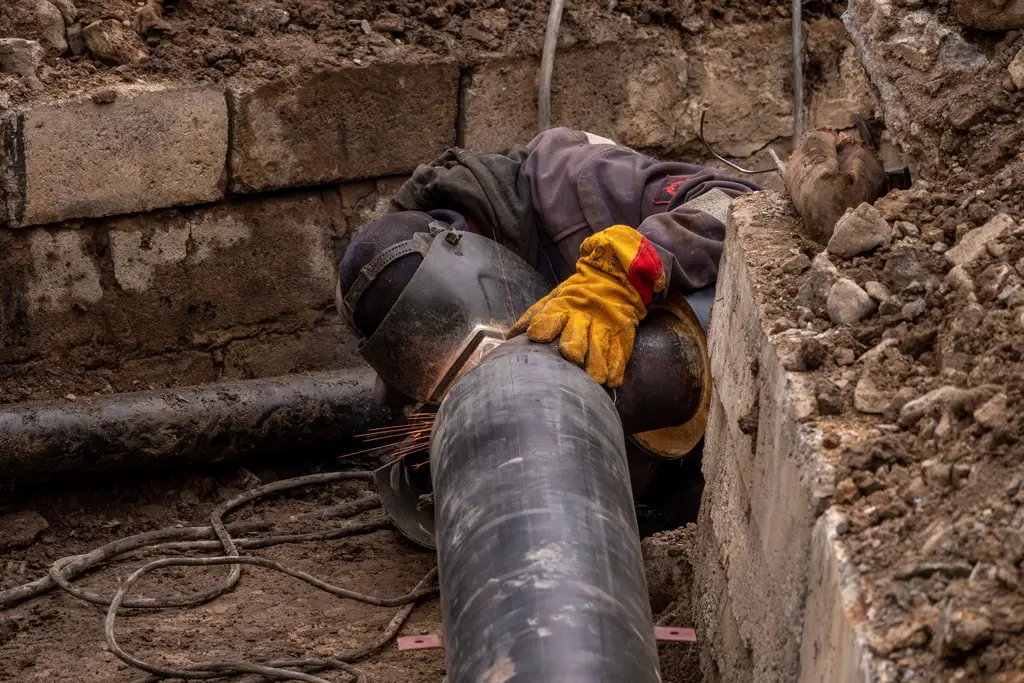
Fix one bad section, usually 4 to 10 feet, by digging at the marked spot. Good when the rest of the line is in decent shape. Our locator marks the exact spot, so the hole is small.
D-04REPAIR / REPLACE
When a line is broken, cleaning won't fix it. We show you the damage on camera, explain the repair options that fit your pipe, your yard and your ledge, and give you a flat-rate price in writing for each one.
Fix one bad section, usually 4 to 10 feet, by digging at the marked spot. Good when the rest of the line is in decent shape. Our locator marks the exact spot, so the hole is small.
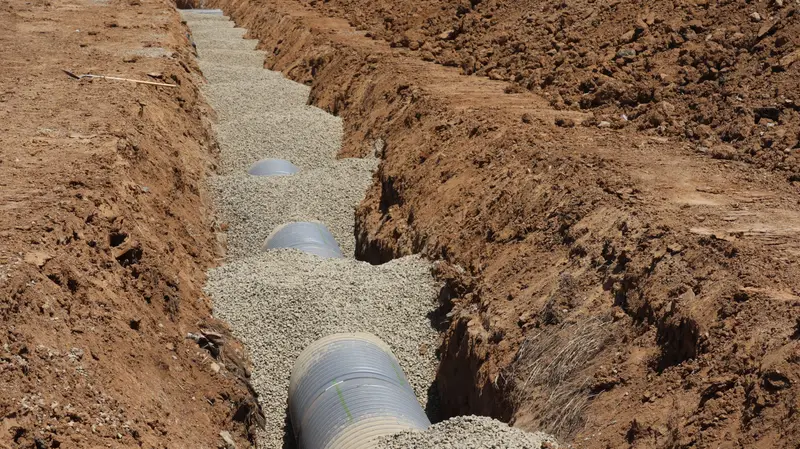
Dig and replace the line from the house to the street connection or the septic tank with new PVC. Best for collapsed pipe, long bellies, Orangeburg, or lines that run too shallow. Excavation also lets us fix the slope, which no trenchless method can do.
We pull a resin-soaked liner into the old pipe and cure it in place, forming a new, jointless pipe inside the old one. Roots can't get in at joints that no longer exist. Lining works when the old pipe still holds its shape and doesn't have a serious belly. The front lawn, the driveway and the maple tree stay where they are.
A bursting head is pulled through the old pipe, breaking it outward while pulling new pipe in behind it. It needs a pit at each end, not a trench the whole way. Good for replacing clay tile or cast iron under a driveway or walkway, when the soil allows it.
Trenchless repairs are great when they fit. Around Manchester, a few things decide whether they do:
The camera footage answers most of these questions before we quote. We'll tell you if trenchless doesn't fit, even when it's what you hoped to hear.
We stand behind our work. If something we fixed isn't right, call us and we'll come back and make it right.
The camera tells us. Roots and grease in a sound pipe can be cleaned. A collapsed section, missing pieces, a separated joint or a long belly can't be cleaned away. We'll show you the footage and explain which category your line falls into before quoting anything.
Not always. Trenchless often costs less overall when the line runs under a driveway, a patio, mature trees or deep ledge, because there's much less restoration. For a short, shallow run across open lawn, a traditional dig can cost less. We'll quote both when both are possible.
In most New Hampshire towns the homeowner owns the lateral from the house to the connection at the main, and sometimes to the main itself. Rules vary by town, so ask us about your town's rules. We can check the plan and permit requirements before we quote.
Yes. We repair and replace the building sewer between the house and the septic tank, including the inlet connection. We don't repair tanks or leach fields. If the camera shows the problem is in the septic system itself, we'll show you the footage so your septic company can see it too.