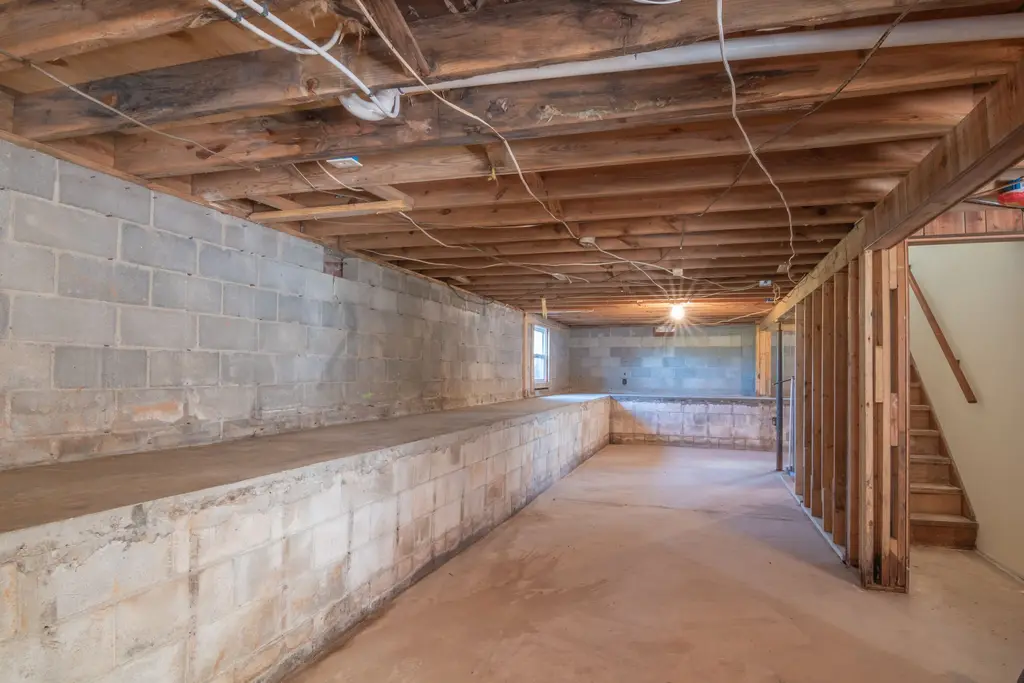
D-05MAIN / SEPTIC LINE
Main line and septic line clogs
Every drain in your house ends up in one pipe. In Manchester and the denser parts of Hooksett and Londonderry, it runs to the city or town sewer. In much of Bedford, Goffstown, Candia and Auburn, it runs to a septic tank in the yard. Either way, when it clogs, the whole house stops draining.
Signs the clog is in the main line
- More than one fixture is slow or backed up at the same time
- Water comes up the basement floor drain or the lowest tub when the washer drains
- Toilets gurgle when you run the sink
- Flushing a toilet makes water rise in the tub
- Sewage smell in the basement
If two or more of these sound familiar, it's not a sink clog. Stop using water and call.
City sewer: house to street
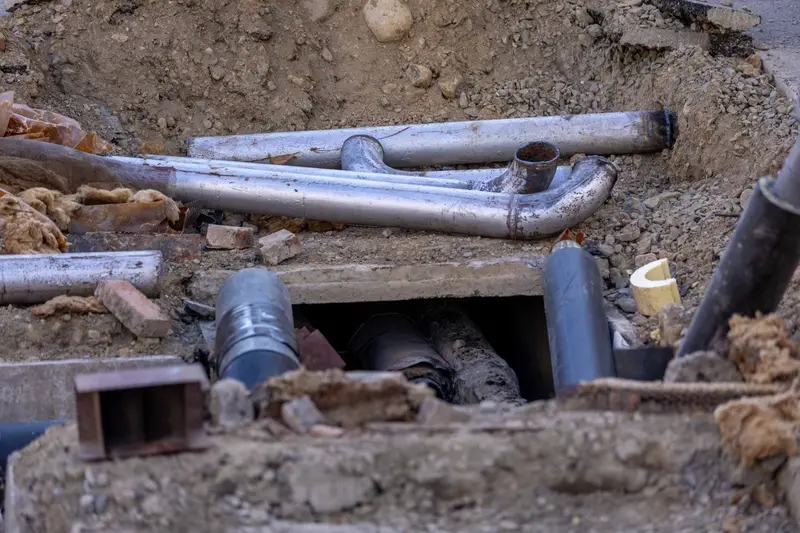
The pipe from your foundation to the city main is called the lateral or building sewer. In older Manchester neighborhoods it's often clay tile laid decades ago, sometimes with an old cast-iron section inside the foundation. Roots and offset joints are the usual causes. We clear it from a cleanout or through a toilet flange, then run the camera to see why it clogged.
Septic system: house to tank
On a septic system, the building sewer runs from the house to the inlet of the tank, usually 10 to 30 feet. Clogs here look exactly like a city sewer clog from inside the house. The cause can be:
- A clog in the pipe itself: wipes, grease, roots or a sag
- A blocked inlet baffle at the tank
- A full tank that's overdue for pumping
- A failing leach field that can't take water, so the tank backs up
We clear and camera the pipe up to the tank. If the line is clear and the tank is the problem, we'll tell you that on the spot, show you the footage, and suggest you call a septic pumping company. We don't pump tanks or repair leach fields, so we have no reason to sell you either one.
Frozen lines
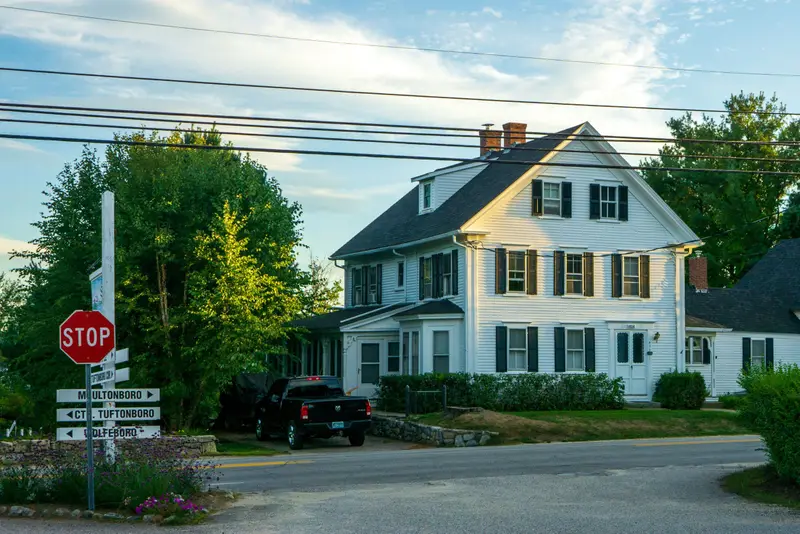
It's rare, but in a hard New Hampshire cold snap, shallow sections of a building sewer can freeze, especially where ledge kept the pipe from going deep or where a line runs under a driveway that gets plowed down to bare pavement. Low-flow houses and seasonal homes are most at risk. We can locate the frozen section with the camera and thaw it with warm water jetting.
How we handle a main line call
- Phone triage. Dispatch asks a few questions to tell a main line clog from a fixture clog, and gives you the trip fee and arrival window.
- Find access. Cleanout, toilet flange, or a vent on the roof as a last resort.
- Clear the line. A sectional cable machine sized for 4-inch pipe, or the jetter when roots or grease call for it.
- Camera. We run the camera to see what caused it. On septic lines we go up to the tank inlet.
- Explain and quote. If the line is sound, you're done. If not, you get options and flat-rate prices in writing.
No cleanout? We can add one
Many older homes don't have an accessible cleanout, so every main line call means pulling a toilet. An exterior or basement cleanout makes future service faster, cleaner and usually less expensive. We'll quote it on site if you want one.
Main line questions
Q01How do I know if my house is on septic or city sewer?
Check your property tax bill or water bill. A sewer charge usually means city or town sewer. Many homes in Bedford, Goffstown, Candia and parts of Londonderry and Hooksett are on septic. If you're still not sure, we can find out where the line goes with the camera and locator.
Q02Should I get my septic tank pumped or call a drain company first?
If you know the tank hasn't been pumped in several years, call your septic company first. If it was pumped recently, or you're not sure, call us. We clear and camera the line to the tank, and if the tank turns out to be the issue, you'll know before paying for anything else.
Q03Can a main line clog damage my house?
Yes. Sewage backing up into a finished basement can ruin flooring, drywall and anything stored on the floor, and it's a health risk. The sooner you stop using water and call, the less damage there is. We answer 24 hours a day, at the same rate on nights and weekends.
Q04Why did my main line clog in the middle of winter?
Cold weather makes grease harden in the pipe faster, and holidays mean more cooking and more guests flushing. Roots also keep growing slowly in winter, especially where a line runs near a warm foundation. A frozen shallow section is less common but possible during long cold snaps.