
SHEET 05FAQ
Drain and sewer questions, answered plainly
The questions we hear most on the phone and at the kitchen table after a camera run. Don't see yours? Call or text us.
Pricing and booking questions
Q01How does your pricing work?
We charge a flat-rate price per job, not by the hour. Dispatch tells you the trip and diagnostic fee on the phone before we drive over. Once we know what's wrong, you get a written price for each option. Nothing starts until you approve one, and the price doesn't change unless you add work.
Q02Do you charge more for nights, weekends or holidays?
No. Emergency calls at night, on weekends and on holidays are billed at the same rate as weekday calls. Drains don't pick convenient times, and we don't think you should pay extra for that. The trip fee is still told to you on the phone before we come out.
Q03Do you offer financing?
Yes, for larger jobs like sewer line replacement and trenchless lining. Financing is available on approved credit through a third-party lender. We'll explain the options when we give you the written quote, and there's no pressure to use it. Most drain cleaning and camera calls are paid by card on site.
Q04What payment methods do you take?
Major credit and debit cards, checks, and bank transfers for scheduled work. For rental properties, we can invoice the owner or property management company directly, with photos, footage and notes attached. Payment is due when the work is done unless we've agreed to something else in writing ahead of time.
Camera and diagnosis questions
Q01Why do you insist on running a camera?
Because a sewer line is buried several feet down and nobody can see it. Without footage, a repair quote is a guess. With it, you can see roots, cracks, bellies and broken joints yourself, share the video for a second opinion, and know exactly what you're paying to fix.
Q02What is Orangeburg pipe, and do I have it?
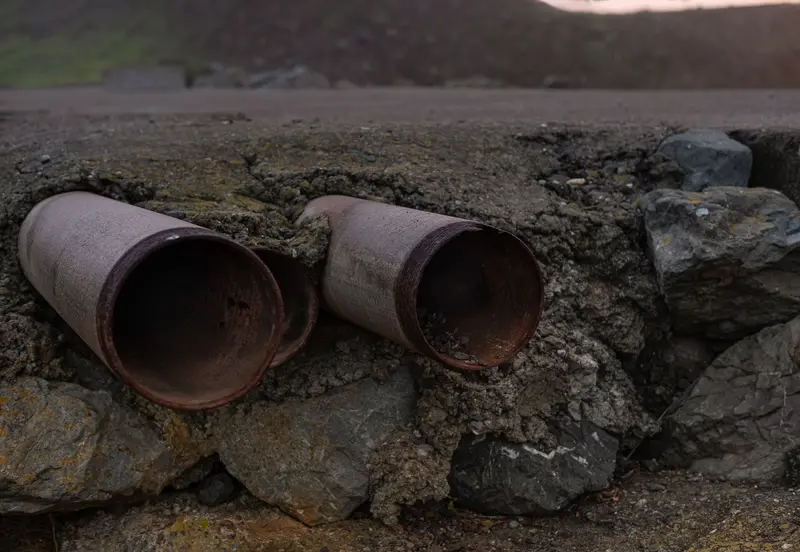
Orangeburg is sewer pipe made from wood fiber soaked in coal tar, used widely in the 1950s and '60s. It slowly goes oval and blisters, then collapses. Plenty of ranches and capes in Hooksett, Goffstown and Manchester's outer neighborhoods still have it. A camera inspection tells you for sure.
Q03Are tree roots really that big a deal?
In clay tile lines, yes. Roots find the small gaps at each joint, then grow into a mat that catches paper and grease until the line blocks. Maples are the most common culprit around Manchester. Cutting roots buys time, but only lining or replacing the pipe seals the joints for good.
Q04Can you tell how old my sewer line is?
Usually close enough to be useful. Pipe material, joint style and past repairs tell us a lot, and so does the house's age. Clay tile and cast iron suggest older work, Orangeburg points to the 1950s and '60s, and PVC is newer. We'll note what we see in your written summary.
Repair questions
Q01What is trenchless sewer repair?
It's a way to repair or replace a sewer line without digging a trench the full length of it. Pipe lining forms a new pipe inside the old one. Pipe bursting pulls new pipe through while breaking the old one apart. Both need small access pits instead of a long trench across your yard.
Q02Why can't every line be fixed with trenchless?
Lining follows the old pipe, so a collapsed section or a deep belly stays a problem. Pipe bursting struggles in ledge and some soils. Around Manchester, ledge, bellies and Orangeburg that has already collapsed are the most common reasons we recommend a dig. The camera footage shows which situation you're in.
Q03Does frost affect sewer repairs in winter?
It can. New Hampshire frost can go several feet deep in January and February, which makes excavation slower. We dig year-round and can thaw ground when needed, and we'll tell you in the quote if winter conditions affect the schedule. Trenchless lining is often less affected by frozen ground.
Septic and backup questions
Q01Do you work on septic systems?
We work on the pipe between your house and the septic tank, including clearing, camera inspection and repairs up to the tank inlet. We don't pump tanks or repair leach fields. If the problem is in the tank or field, we'll show you and suggest you call a septic company.
Q02What is a backwater valve, and do I need one?
A backwater valve is a one-way valve in your main line that closes if the city sewer backs up, so sewage can't flow into your basement. It's most useful in older neighborhoods with storm-related backups. Ask us whether your house is a candidate and about your town's rules.
Q03What should I do if sewage is coming up in my basement?
Stop using water in the house right away, keep away from anything electrical near the water, and keep kids and pets out. Take photos for insurance. Then call our 24/7 line at (603) 555-0148. We clear the line first and find the cause after.